
侠客行
Case against Secretary of Bangladesh Hindu Law Reform Parishad dismissed_我的网站

一 | Dhaka, Oct 19 (UNI) Dhaka's Cyber Tribunal on Wednesday dismissed the case against Bangladesh Hindu Ain Sanskar Parishad General Secretary Pulak Ghatak for religious insult and defamation as not actionable.
The president of the organization Maina Talukdar and the general secretary Pulak Ghatak called upon the people of all walks of life to work unitedly to resolve the gender discrimination and inconsistencies of Hindu law.
According to The Hindu Married Women's Right to Separate Residence and Maintenance Act, 1946, even if a married man keeps a housekeeper or sex slave in his house, his wife cannot desert or divorce that husband. As a result, married women's lives are completely subordinated to their husbands, from which they are not free.
According to Section 2 (6) of the Act ("if he keeps a concubine in the house or habitually resides with a concubine"), if a woman's husband stays in the same house with a concubine or a concubine, that woman will only have the opportunity to live separately. However, she has to remain single for the rest of her life by maintaining chastity as the wife of that husband. Not only this, various sections of the Hindu Inheritance Act enacted during the British era have deprived the rights of the Rakshits and the unborn children of the Rakshits, which is absolutely injustice to the innocent child.
Keeping sex slaves or guards is against civilization and humanity. Therefore, Bangladesh Hindu Ain Sanskar Parishad feels that the general secretary of the organization did not do any wrong or injustice by criticizing such laws by writing on social media and demanding its change.
Demands are being made on the government to urgently reform Hindu laws to end discrimination and injustice against women and gender-diverse communities and children.
UNI MAZ SHK2007。
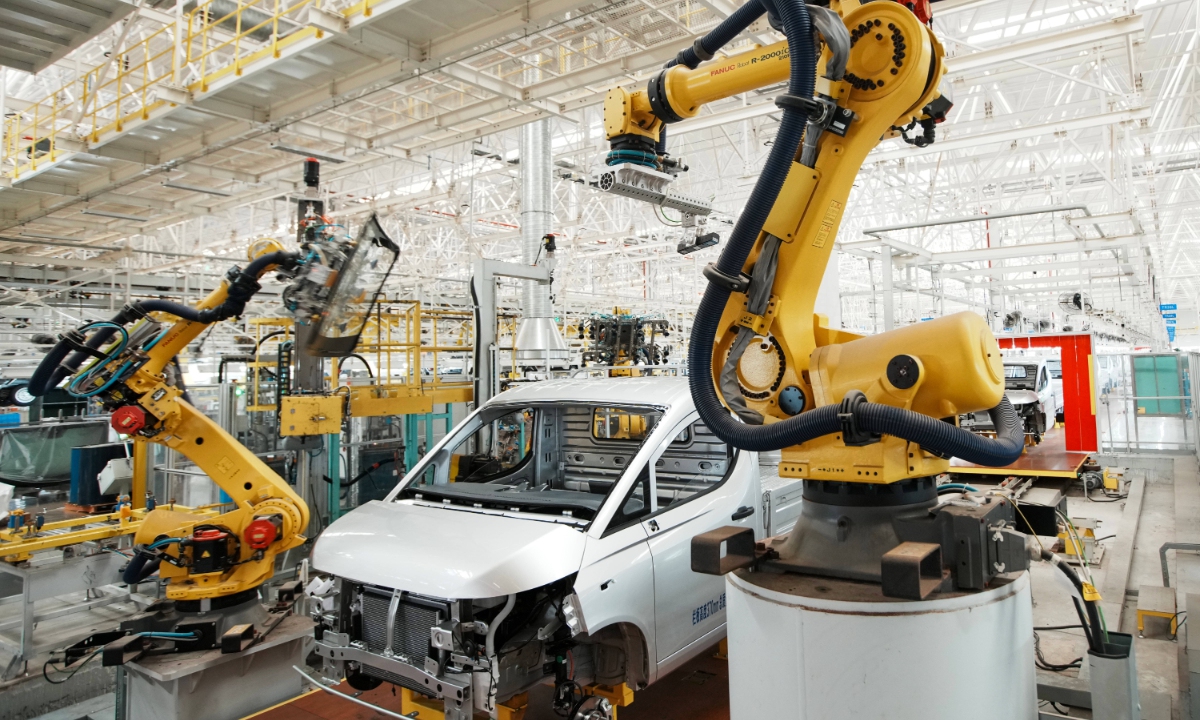
China's auto exports maintained strong growth in July, with shipments exceeding 1 million units for two consecutive months in June and July, according to the China Association of Automobile Manufacturers (CAAM) released on Wednesday, and new-energy vehicle (NEV) exports were particularly strong.
The latest data show that China exported 1.043 million vehicles in July, up 0.6 percent month-on-month and 81.3 percent year-on-year. Auto exports had already exceeded 900,000 units in both April and May, before rising above 1 million units in both June and July.
Notably, NEV exports were particularly upbeat. China exported 553,000 NEVs in July, up 5.7 percent month-on-month and 145.5 percent year-on-year. NEVs have accounted for more than half of China's total auto exports for two consecutive months.
The rapid growth in China's auto exports is mainly attributed to the country's complete automotive industrial chain, the CCTV News reported, citing a representative with the CAAM. From lithium processing and battery manufacturing to electric motors, control systems and vehicle assembly, China has sufficient production capacity, competitive costs and a highly resilient supply chain, said the representative.
The continued growth in NEV exports reflects rising global demand for cost-effective Chinese products and the needs of the global green transition, Cui Dongshu, secretary-general of the China Passenger Car Association, told the Global Times on Wednesday, noting that China's highly coordinated NEV ecosystem enables faster technological and product upgrades while keeping costs under control, giving the industry a key competitive edge.
Among China's top 10 auto exporters, Chery exported 1.141 million vehicles in the first seven months of the year, up 71 percent year-on-year and accounting for 18.6 percent of total exports. Tesla recorded the fastest growth from a year earlier, with exports reaching 295,000 units, up 130 percent, according to the CAAM.
"Despite rising trade barriers in the US and Europe, China's NEV exports continue to grow rapidly, reflecting strong global demand. Trade restrictions may shift export flows, but cannot easily curb demand for competitive products," said Cui.
Meanwhile, Chinese NEV companies are diversifying its markets, with regions such as Southeast Asia playing a growing role.
The domestic market remained the largest market for NEVs. In the first seven months, NEVs accounted for 53.2 percent of domestic auto sales, according to the CAAM.
The booming demand for China-made NEVs at home and abroad also rebuts the "overcapacity" narrative pushed by some Western media and politicians, as facts and figures show that demand is outpacing supply, Cui said.
An official from China's Ministry of Commerce told a press conference on July 28 that China has the world's largest consumer market, providing a testing ground for new technologies, products and services. The country has ranked first globally in NEV sales for 11 consecutive years.
China has built a complete and highly efficient NEV industrial system covering the entire chain, from basic materials and auto parts to complete vehicles and manufacturing equipment, with globally leading supply chain responsiveness, cost control and delivery speed.
"A complete, efficient and innovative automotive ecosystem is the result of long-term market competition and industrial development... It cannot be easily replicated in the short term or weakened by tariffs and trade barriers," Cui said.
The industry veteran said that looking ahead, China's NEV competitiveness will increasingly be measured not just by exports, but by the global presence of its companies, technologies and supply chains, as domestic automakers shift from mainly exporting vehicles to building production, supply chains and service networks overseas.
。

二 |
Current article:http://eqq7uoq.cengzaodengchawonin.cyou/list_8kvm6/eezo65d.html
Published on:13:33:54