
新唐
“迈开步 动出彩”亮相鄂战全国总决赛_我的网站

一 |
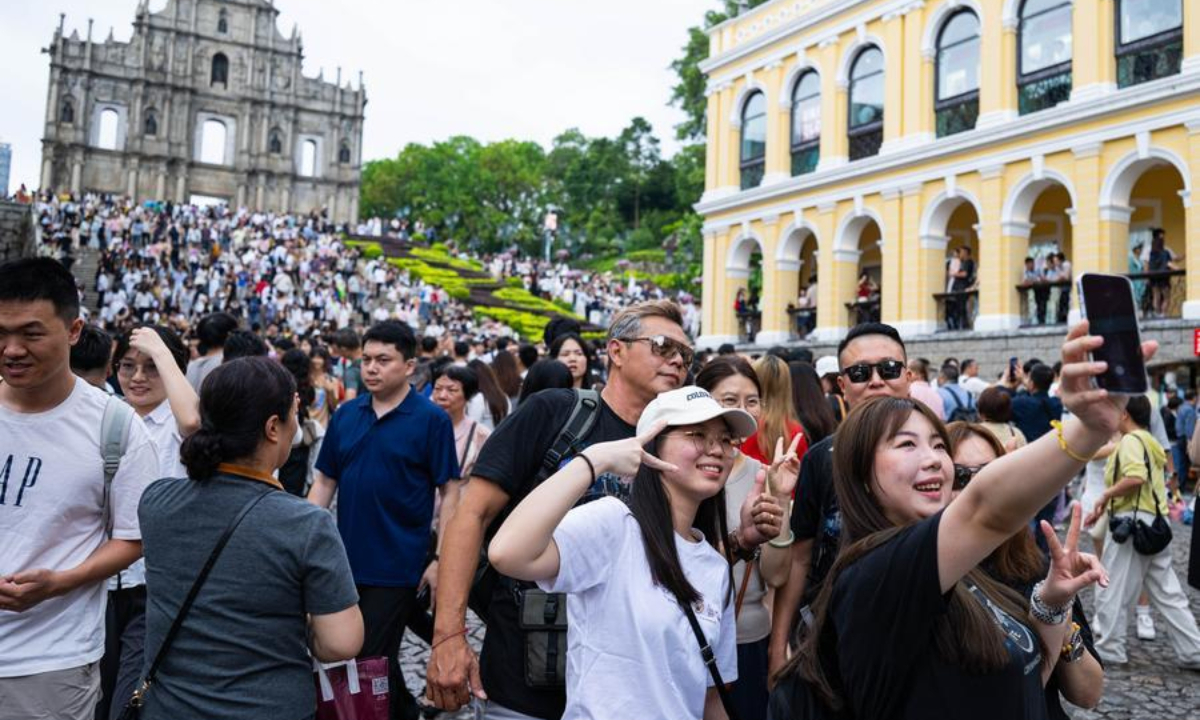
Macao and its neighbor Hong Kong are China's two special administrative regions (SARs) governed under the "one country, two systems" policy. This arrangement, in place since China resumed the exercise of sovereignty over the two cities in the late 1990s, allows them to maintain their capitalist systems and ways of life within socialist China.
The third five-year plan of the Macao SAR, unveiled on Tuesday, sets out policy priorities for the next stage, focusing on economic diversification, social progress, and closer integration into national development, while ensuring security.
Since its return to China in 1999, Macao has evolved from a city once associated largely with casinos and gangster films into a vibrant international hub with a dynamic economy, a low crime rate and an increasingly comprehensive social welfare system. It now ranks among the world's wealthiest economies in terms of GDP per capita.
With the plan, the SAR government is proactively positioning Macao within the broader context of national development and actively implementing the relevant arrangements of the country's 15th Five-Year Plan (2026-2030), said Macao SAR Chief Executive Sam Hou Fai.
ECONOMIC DIVERSIFICATION
Economic diversification has remained a central theme throughout Macao's three five-year plans, from the first plan unveiled in 2016 to the latest one.
Sam said economic diversification is essential to sustaining Macao's long-term prosperity and stability and is a task the SAR government must tackle, no matter how difficult it may be.
According to Sam, the Macao SAR government will advance economic diversification through major projects and a government guidance fund to build Macao into a world tourism and leisure center and develop its priority industries, namely, big health, modern finance, high technology, exhibition and convention, as well as culture and sports.
The plan sets the target of raising the share of value added from non-gaming industries to around 60 percent of Macao's GDP by 2030.
Cheong Chok Man, director of the Policy Research and Regional Development Bureau under the Macao SAR government, said that setting such a target means Macao will need to intensify its efforts to achieve greater economic diversification.
Major projects aimed at promoting economic diversification during the period are expected to involve around 130 billion patacas (about 16.1 billion U.S. dollars) in budgeted investment.
For a small economy like Macao with a GDP of roughly 50 billion U.S. dollars in 2025, the investment represents a significant commitment, said Lao Chi Ngai, president of the Macao Economic Association.
BROADER INTEGRATION
The plan is designed to advance the high-quality development of the Guangdong-Macao In-Depth Cooperation Zone in Hengqin.
Located in Zhuhai, Guangdong Province, Hengqin is separated from Macao by a narrow stretch of water. The cooperation zone was established in 2021 to create new space for Macao's development.
This year marks a crucial period for the zone's second phase of development. The latest five-year plan calls for addressing challenges through reform and advancing deeper integration between Macao and Hengqin, with science and technology and education serving as key drivers.
The plan sets quantitative targets in areas including industrial diversification, cross-border flows of production factors, and the integrated provision and sharing of public services.
Richard W. Hu, dean of the Faculty of Social Sciences at the University of Macau, said the plan moves beyond integration in individual industries toward broader integration encompassing industries, people's livelihoods, talent and governance.
Hengqin is expected to develop into an integrated urban area that serves as an extension of Macao's industries and a vibrant cross-border community. In doing so, it could offer a landmark example of leveraging the institutional strengths of "one country, two systems" to foster closer regional synergy, Hu said.
SECURITY AS FOUNDATION
Alongside economic diversification and regional integration, the latest plan places security among its major priorities.
"Amid a complex and evolving international landscape, Macao faces potential challenges arising from a combination of traditional and non-traditional security risks," said Yin Yifen, director of the Social, Economic and Public Policy Research Center at Macao Polytechnic University.
He said the plan seeks to improve the legal framework and enforcement mechanisms for safeguarding national security, strengthen security governance in emerging areas such as cyberspace, data and artificial intelligence, and further develop smart policing.
It also places emphasis on national security education for young people.
"Making security an integral part of governance in the SAR will help lay a stronger foundation for economic diversification, improved livelihood and deeper integration between Macao and the mainland," Yin said.
。 8月22日至24日,2026年湖北省鄂战全国总决赛在武汉体育学院科技学院篮球馆开赛。借此赛事契机,中国体育彩票“迈开步 动出彩”进赛事活动正式启动。

二 | 湖北体彩武汉分中心在赛事现场开展了为期3天的主题宣传活动,为现场观众和参赛选手带来了一场兼具运动活力与公益温度的体验。活动现场,分中心设立了专属宣传展位,通过图文展板等多种形式,向两千余名参与者直观展示了中国体育彩票“来之于民、用之于民”的发行宗旨。

三 | 工作人员向现场群众介绍了彩票公益金在支持全民健身设施建设、开展群众体育赛事等方面的相关成果,让公众了解每一张体育彩票背后的公益力量。同时,现场积极推广“安心购彩守护行动”,倡导大众树立理性购彩观念,营造健康的购彩环境。鉴于本次篮球赛事的参与者以亲子家庭为主,分中心将“营造健康成长环境,不向未成年人售彩及兑奖”作为本次宣传的主要内容。活动现场设置了未成年人保护主题宣传展示,向公众传递关爱下一代身心成长、培养孩子正确价值观的理念。

四 | 工作人员向前来观赛的家长群体发放宣传资料,讲解《中华人民共和国未成年人保护法》中关于禁止向未成年人销售彩票及兑奖的相关法规,呼吁家长与体彩共同守护孩子健康成长。此次“迈开步 动出彩”进赛事活动,是湖北体彩武汉分中心推进责任彩票建设、拓宽公益宣传场景的一次实践。通过“赛事+公益”的模式,体彩不仅为这场篮球比赛注入了温暖的公益底色,更面向大众普及了科学健身与责任购彩的相关知识。

五 |
Current article:http://eqq7uoq.cengzaodengchawonin.cyou/list_mnyq/rma6c.html
Published on:00:00:00
美国恐怖故事_Random reading
- 08-22俄罗斯天然气过境乌克兰的终止对欧盟价格影响甚微
- 08-24连云港彩友领走体彩大乐透一等奖
- 08-21一派忙碌景象!各地重大工程建设加快推进
- 08-25记者:费内巴切和多家英格兰俱乐部有意法兰克福前锋巴霍亚
- 08-23国庆假期酒店预订率辽宁领跑全国
- 08-26NBA官宣完整赛程!10大球星回归战敲定 4队拥有最多全美直播场次
- 08-23累计运营超2.2亿公里 新石器创始人首提“1000万辆无人车+1亿个机器人”目标
- 08-262025年618活动什么时间最便宜已确认:从6月17日晚上8点开始最划算优惠力度最大
- 08-25伊朗总统:美国新一轮对伊经济制裁将一无所获
- 08-27切尔奇:我当年根本不想去西甲,是被都灵驱赶去马竞的
呵呵_Active users
- 彭博社:英特尔可能会在10天内任命新的首席执行官。
- 化肥概念短线拉升,六国化工涨停
- 建昌县与凌源市建立大凌河保护公益诉讼协作机制
- 绝杀巴林,中国男篮亚洲杯首胜
- 世界杯决赛主裁判罚引争议,但他却能带着80万报酬回家,媒体直呼“难以置信”
- 10胜1负!国羽世锦赛第3日全线大捷
- 国台办发布会聚焦两岸交流 吁民进党当局取消不合理限制
- Nuclear submarine INS Arihant test fires Ballistic Missile
- 锁定万亿订单就能躺赚?这可能是AI产业链条上最大的“伪命题”!
- 匈牙利柔道大满贯赛中国队获一铜
- 记者:亚特兰大签乔纳森·罗已达口头协议,总费用超4000万欧
- 16人团队14个印度裔 谷歌新人遭抱团排挤被逼“裸辞”
- 国家防总对浙江福建启动防汛防台风三级应急响应
- 基于SPA3 EV平台打造/2026年年初上市 沃尔沃EX60预告图发布
- 冲冠拼图!曝骑士希望先签后换沃特森:筹划交易施罗德+斯特鲁斯
- 光速下班!王楚钦/孙颖莎横扫对手晋级8强
- 欧洲运营商:华为设备更贵,但更好
- '피처맥주는 옛말'…많이 마시던 한국인 이제 한 캔 골라마신다
机械师_Hottest this week
- 新唐 copyright
- Some of the content comes from the Internet. If you have any offence, please raise it.